---
title: A Shipper's Guide to Partial Truckload
description: Discover how partial truckload shipping can save costs and reduce risk for mid-sized freight shipments, offering a flexible solution between LTL and FTL.
image: https://blog.matson.com/hubfs/2026-07-16%20Partial%20Truckload%20Blog%202.jpg
---
[](http://www.matson.com/logistics)
- [About Matson Logistics](https://www.matson.com/logistics/about-us/index.html)
- [Shipping](https://www.matson.com/matnav/index.html)
- [Logistics](https://www.matson.com/logistics/index.html)
- [Investors](https://investor.matson.com/)
- [Community](https://www.matson.com/community/index.html)
- [Contact Us](https://info.matson.com/contact-us)
- Work With Us
- [Overview](https://www.matson.com/logistics/about-us/index.html)
- [Our Logistics Model](https://www.matson.com/logistics/about-us/our-logistics-model.html)
- [Contact Us](https://info.matson.com/contact-us)
- [Customer Service](https://www.matson.com/logistics/about-us/customer-service.html)
- [Agent Services](https://www.matson.com/logistics/about-us/agent-services.html)
- [Obtain New Agent Forms](https://www.matson.com/logistics/about-us/agent-forms.html)
- [Industry Links](https://www.matson.com/logistics/about-us/links.html)
- [Careers](https://www.matson.com/corporate/careers.html)
- [Become a Carrier](https://www.matson.com/become-a-carrier.html)
- [Blog](https://blog.matson.com/blog)
- Transportation Services
- [Overview](https://www.matson.com/logistics/transportation/index.html)
- [Expedited LCL](https://www.matson.com/logistics/supply-chain/expedited-lcl-services.html)
- [FTL and LTL](https://www.matson.com/logistics/transportation/highway.html)
- [Specialized and Open Deck](https://info.matson.com/specialized-opendeck)
- [Intermodal](https://www.matson.com/logistics/transportation/intermodal.html)
- [Domestic Intermodal](https://www.matson.com/logistics/transportation/intermodal.html)
- [International Intermodal](https://www.matson.com/logistics/transportation/intermodal-international.html)
- [Mexico Service](https://www.matson.com/logistics/transportation/mexico-service.html)
- [Request a Quote](https://info.matson.com/contact-us)
- Warehousing
- [Overview](https://www.matson.com/logistics/warehouse/index.html)
- [Oakland Logistics Center](https://www.matson.com/logistics/oakland-logistics-center.html)
- [Savannah Logistics Center](https://www.matson.com/logistics/savannah-logistics-center.html)
- [Distribution Services](https://www.matson.com/logistics/distribution-services.html)
- [Foreign Trade Zone](https://www.matson.com/logistics/foreign-trade-zone.html)
- [Value Added Services](https://www.matson.com/logistics/value-added-services.html)
- [Transload Services](https://www.matson.com/logistics/transload-services.html)
- [Ecommerce Fulfillment](https://www.matson.com/logistics/ecommerce-fulfillment.html)
- [Request a Quote](https://info.matson.com/warehouse-distribution-contact-us)
- Supply Chain
- [Overview](https://www.matson.com/logistics/supply-chain/index.html)
- [Expedited LCL Service](https://www.matson.com/logistics/supply-chain/expedited-lcl-services.html)
- [Products & Services](https://www.matson.com/logistics/supply-chain/overview-products-services.html)
- [Overview](https://www.matson.com/logistics/supply-chain/overview-products-services.html)
- [PO Management](https://www.matson.com/logistics/supply-chain/po-management.html)
- [Supplier Management](https://www.matson.com/logistics/supply-chain/supplier-management.html)
- [Origin Operations](https://www.matson.com/logistics/supply-chain/origin-operations.html)
- [Transportation Management](https://www.matson.com/logistics/supply-chain/transportation-management.html)
- [Destination Services](https://www.matson.com/logistics/supply-chain/destination-services.html)
- [Document Management](https://www.matson.com/logistics/supply-chain/document-management.html)
- [Visibility & Analytics](https://www.matson.com/logistics/supply-chain/visibility-analytics.html)
- [Supply Chain Consulting](https://www.matson.com/logistics/supply-chain/supply-chain-consulting.html)
- [Technology](https://www.matson.com/logistics/supply-chain/overview-technology.html)
- [Overview](https://www.matson.com/logistics/supply-chain/overview-technology.html)
- [Integration and Configuration](https://www.matson.com/logistics/supply-chain/integration-configuration.html)
- [Mobile Solutions](https://www.matson.com/logistics/supply-chain/mobile-solutions.html)
- [Customers](https://www.matson.com/logistics/supply-chain/overview-customers.html)
- [Locations](https://www.matson.com/logistics/supply-chain/locations.html)
- [Request a Quote](https://info.matson.com/supply-chain-contact-us)
- Technology
- [Online Tools Logistics](https://www.matson.com/logistics/online-services/index.html)
- [Customer](https://ml.matson.com/ML_CV_Portal/Ushipmenttracking)
- [Track Shipments](https://ml.matson.com/ML_CV_Portal/Ushipmenttracking)
- [Customer Portal](https://ml.matson.com/ML_CV_Portal/login)
- [Mobile Apps](https://www.matson.com/mobile/app/index.html)
- Carrier
- [View Available Loads](https://ml.matson.com/ML_CV_Portal/UApplyload)
- [Update Load Status](https://ml.matson.com/ML_CV_Portal/login)
- [View Invoice Payments](https://ml.matson.com/ML_CV_Portal/login)
- [Submit Invoice](https://ml.matson.com/ML_CV_Portal/login)
- [Warehousing](http://websynapse.matson.com:9003/WebSynapse/)
- [Access WebSynapse](http://websynapse.matson.com:9003/WebSynapse/)
- [Agents](https://www.matson.com/logistics/about-us/agent-forms.html)
- [Open Sales Toolkit](https://red001.mail.microsoftonline.com/owa/auth/logon.aspx?url=https://red001.mail.microsoftonline.com/owa/&reason=0)
- [Obtain New Agent Forms](https://www.matson.com/logistics/about-us/agent-forms.html)
- [Customer Portal](https://www.matson.com/logistics/customer-portal/index.html)
- [Getting Started](https://www.youtube.com/watch?v=N0Ruw7aO76s&feature=youtu.be)
- [Highway Truckload](https://www.youtube.com/watch?v=RGoBWsmTwl8)
- [LTL, Simplified](https://www.youtube.com/watch?v=dH6a_7U8tpg)
- [Intermodal Rail](https://www.youtube.com/watch?v=wwOSADKgq9Y)
- [Track & Trace](https://www.youtube.com/watch?v=h2MSioGPXBg)
- [Create Custom Reports](https://www.youtube.com/watch?v=EDwVUfA44i8)
- Alaska Logistics
- [Span Alaska](https://www.spanalaska.com/)
# A Shipper's Guide to Partial Truckload
# A Shipper's Guide to Partial Truckload

by [Matson Logistics](https://blog.matson.com/blog/author/matson-logistics)
July 29, 2026
Freight shipping usually gets talked about in two modes: LTL for smaller shipments and FTL for larger ones. But there's a third option that operates between them — partial truckload, or PTL — and it's often overlooked. For shippers moving mid-sized volumes, understanding how partials work can uncover meaningful savings and reduce some of the friction, and frustration, that comes with defaulting to LTL or FTL.
### **The Basics**
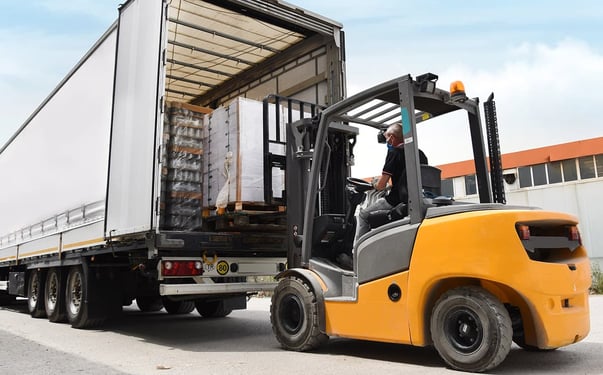
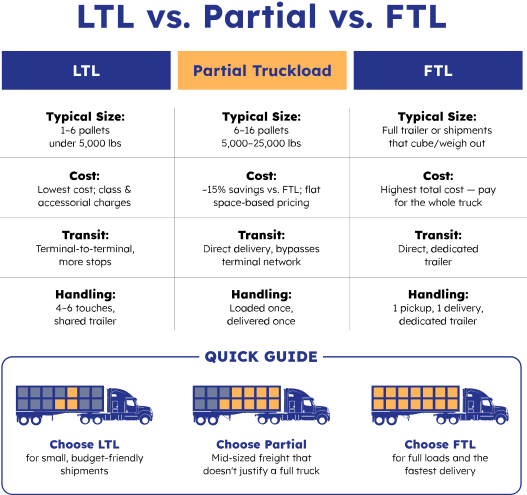
Partial truckload is a shipping mode designed for volume that's too big for standard LTL but too small to justify booking a full trailer. A typical partial shipment runs 6 to 16 pallets, weighs between 5,000 and 25,000 pounds, and occupies 12 to 32 linear feet of trailer space.
The key operational difference is how the freight moves. LTL freight travels through a hub-and-spoke terminal network, getting picked up, transferred, sorted, and re-loaded multiple times before it reaches its destination. FTL freight books an entire trailer and moves directly from origin to destination. Partials fall closer to the FTL model — freight is loaded once, shares space with one or two other shipments heading the same direction, and delivers with minimal handling in between.
That structural difference is what drives most of the advantages.
### **Why Partials Work**
**Pricing built around actual space used.** LTL pricing is class-based, which means rates are driven by freight class, density, weight, and a long list of accessorial charges. Once a shipment gets large enough to trigger cubic capacity rules or high-class surcharges, LTL rates can climb fast. FTL pricing, on the other hand, charges for the entire trailer regardless of how much of it you actually fill. Partials sidestep both problems with flat, negotiated rates based on the space the shipment occupies. Freight class doesn't apply. Accessorials are minimal.
**Less handling, less damage.** LTL freight is handled four to six times between pickup and delivery. Each touch introduces damage risk and adds time. Partial shipments typically stay on the same trailer from pickup to delivery, which means fewer opportunities for damage and cleaner claim records — especially for shippers with fragile, high-value, or difficult-to-stack freight.
**Faster transit than LTL.** Because partials bypass the terminal network, they generally move on FTL-comparable timelines. On longer lanes, that can mean saving several days versus standard LTL.
**Predictable invoicing.** No reweighs or dimensional corrections, no reclasses, no surprise accessorials showing up on the invoice weeks after delivery. What you're quoted is generally what you pay.
### **When Partials Make Sense**
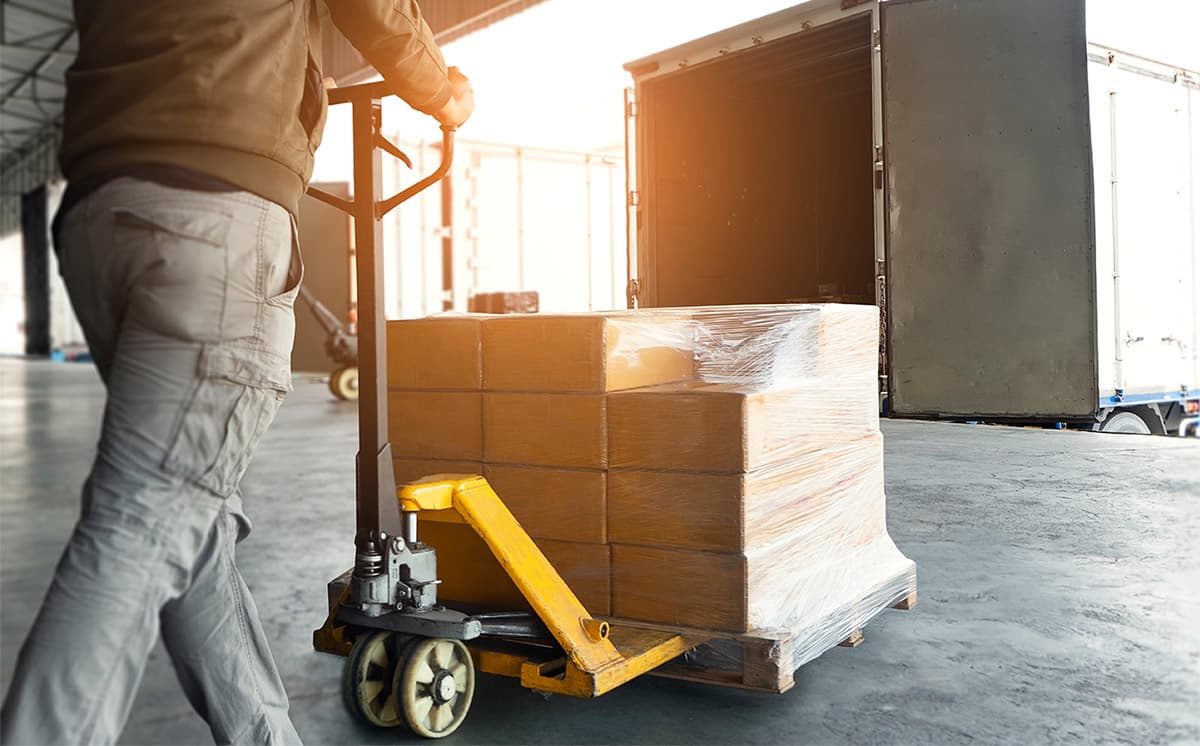
The clearest signal that partials might be the right choice is shipment size. If you're regularly moving freight in the 6 to 16 pallet range, or the 5,000 to 25,000 pound range, on lanes of 500 miles or more, you're squarely in partial territory.
There are two common scenarios where the mode switch pays off:
**Coming down from FTL.** Shippers booking full trailers that aren't cubing or weighing out are paying for space they don't use. Partials let them right-size that spend without giving up direct service.
**Moving up from LTL.** Shippers with heavier, larger, or higher-class LTL shipments often find their invoices getting hammered by class rates, cubic capacity surcharges, and accessorials. Partials bypass that pricing structure entirely.
Other qualifying signals: freight that's floor-loaded or non-stackable, freight that's frequently damaged in the LTL network, or freight moving on lanes where FTL capacity is tight during peak season.
### **When Partials Don't Make Sense**
Partials aren't the right answer for every shipment. Small, dense freight under 5,000 pounds is almost always more economical on LTL. Shipments that genuinely fill a trailer belong on FTL. And freight that's extremely time-sensitive with narrow delivery windows may still be better on FTL, since partials can involve slightly longer pickup windows depending on how the carrier is consolidating loads.
Volume LTL is another option worth understanding. It's often confused with partial truckload but operates differently: volume LTL still moves through the LTL terminal network, just with space-based pricing instead of class-based pricing. It can be less expensive than partials on certain lanes, but the freight still gets handled multiple times. For shippers who prioritize speed and damage prevention over the last few dollars of savings, partials tend to win.
### **A Seasonal Note**
Partials pay off most when capacity tightens. Early in the year, when demand cools and FTL trucks are easy to find, the cost gap between spot rates and partials narrows. During tighter FTL cycles, such the ramp up for produce season, or peak-season restocking, partials become the smarter play. Shippers who plan around these swings lock in better rates and dodge the year's tightest squeezes.
### **The Bottom Line**
Partial truckload isn't a niche service or a workaround — it's a full mode of freight transportation designed for a specific type of shipment. Shippers who default to LTL for everything under a full truck, or FTL for everything over a few pallets, are often leaving savings on the table and taking on damage risk they don't need to.
The best freight strategies use all three modes — LTL for small and dense, FTL for full trailers, partials for everything in between — and quote multiple options on borderline shipments rather than assuming one is always right.
*Matson Logistics offers partial truckload service across our North America highway network, alongside LTL, FTL, and specialized options. That gives you the flexibility to quote and route each shipment based on what makes the most sense for cost, timing, and handling—without forcing a one-size-fits-all approach.*
Got a load? Reach out to our [Transportation Team](https://info.matson.com/contact-us) to request a quote or ask a question.
###### Tags:
[Transportation,](https://blog.matson.com/blog/tag/transportation) [Transportation Services,](https://blog.matson.com/blog/tag/transportation-services) [LTL and FTL,](https://blog.matson.com/blog/tag/ltl-and-ftl) [Partial Truckload](https://blog.matson.com/blog/tag/partial-truckload)

Post by [Matson Logistics](https://blog.matson.com/blog/author/matson-logistics)
July 29, 2026
### Subscribe to Our Blog
[](https://www.matson.com/logistics/index.html)
- [Transportation](https://www.matson.com/logistics/transportation/index.html)
- [Logistics](https://www.matson.com/logistics/index.html)
- [About](https://www.matson.com/logistics/about_us/index.html)
- [News & Insights](https://blog.matson.com/blog)
- [Contact Us](https://info.matson.com/contact-us)
©2026 Matson Logistics. All rights reserved. [Privacy Policy](https://www.matson.com/privacy-policy.html)
-
-
-
```json
{
"@context" : "https://schema.org",
"@type" : "BlogPosting",
"author" : {
"@type" : "Person",
"name" : "Matson Logistics",
"url" : "https://blog.matson.com/blog/author/matson-logistics"
},
"dateModified" : "2026-08-03T23:00:00.144Z",
"datePublished" : "2026-07-29T23:02:02.000Z",
"headline" : "A Shipper's Guide to Partial Truckload",
"image" : [ "https://blog.matson.com/hubfs/2026-07-16%20Partial%20Truckload%20Blog%202.jpg" ],
"mainEntityOfPage" : {
"@id" : "https://blog.matson.com/blog/a-shippers-guide-to-partial-truckload",
"@type" : "WebPage"
},
"publisher" : {
"@type" : "Organization",
"logo" : {
"@type" : "ImageObject",
"url" : "https://blog.matson.com/hubfs/ML-BlueRed-on-White.jpg"
},
"name" : "Matson Logistics"
}
}
```